If you’ve ever eaten with Koreans, you’ve probably noticed something: before you’re halfway through your meal, they’re already done.
No one’s rushing you — it’s just the Korean way of eating.
To outsiders, it might seem intense or even a little stressful, but behind this fast-paced dining style lies a fascinating blend of history, work culture, and social habits that make Korean mealtime unlike anywhere else in the world.
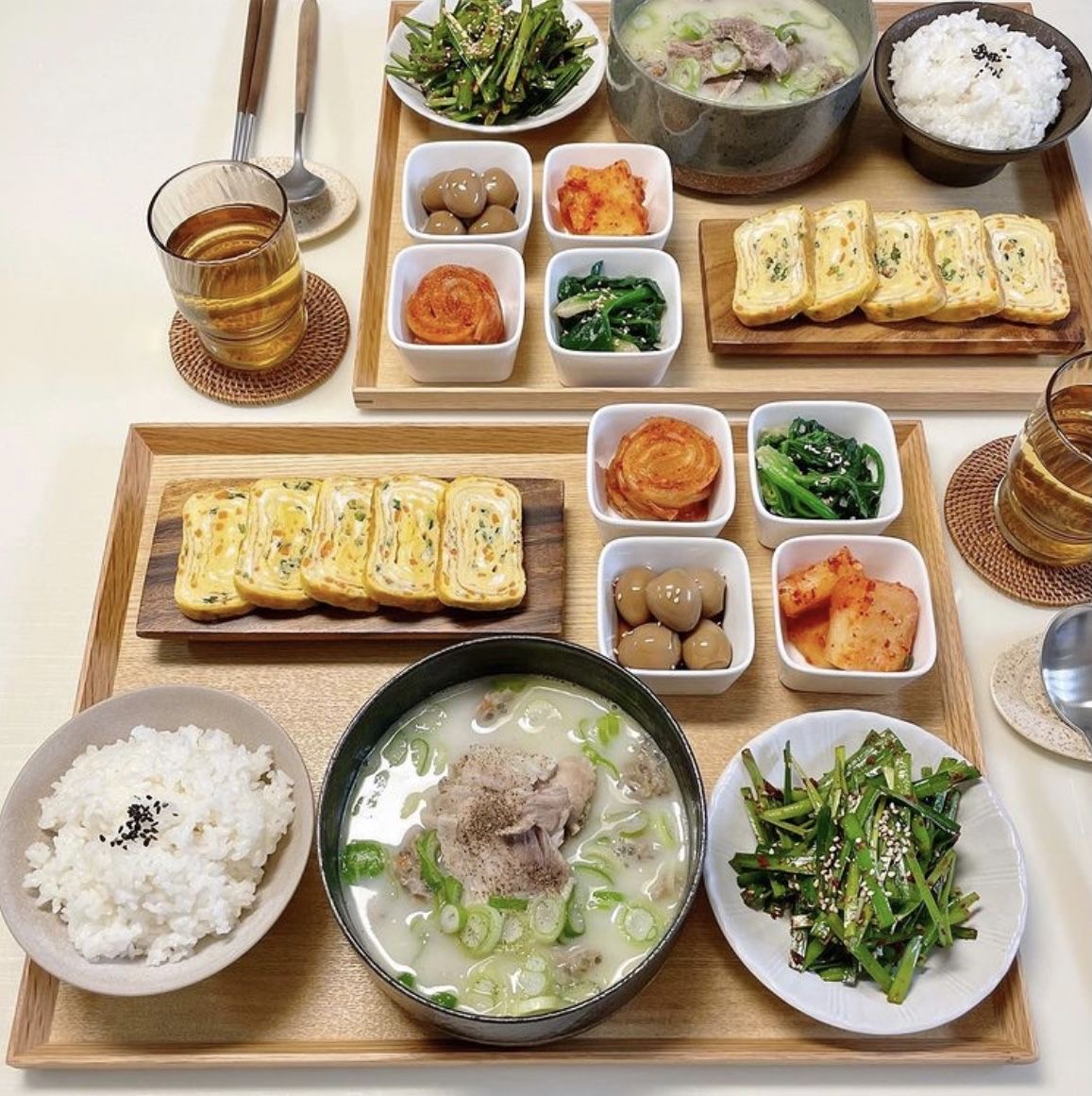
1. ⚡ A “Quick Meal” Nation
Korea is famous for its “ppalli-ppalli (빨리빨리)” culture — meaning “hurry, hurry.”
It’s not about impatience; it’s about efficiency.
That same mindset appears everywhere — from the subway system to food delivery, and yes, even at the dining table.
Meals are often quick, practical, and focused.
Instead of long conversations over food, Koreans tend to eat first, talk later — or not at all.
It’s part of the rhythm of daily life in a society where time is seen as precious.
💡 Tip: If you linger too long in a busy restaurant, you might feel subtle pressure to finish up — tables turn fast here!
⸻
2. 🍚 The Traditional Roots of Fast Eating
Historically, Korean meals were communal.
Families and farmers shared large dishes at one table, each person using their own spoon and chopsticks to eat directly from the bowls.
There wasn’t much time to chat — especially during farming seasons when everyone had to get back to work quickly.
This habit became part of everyday behavior: eat together, eat quickly, and return to what needs to be done.
💡 Fun fact: Even traditional meals like bibimbap (비빔밥) or gukbap (국밥) — rice mixed with soup — are designed to be eaten quickly and efficiently.
⸻
3. ⏰ The Modern Workday Factor
Korean office workers often have short lunch breaks — usually just 30 minutes to an hour.
That means meals need to be fast, filling, and accessible.
As a result, you’ll find:
• Tiny restaurants with pre-cooked side dishes (banchan, 반찬) ready to serve in seconds.
• Lunch spots where customers order, eat, and leave within 15 minutes.
• Delivery apps that bring food within 10–20 minutes — a record speed in most countries.
💡 Tip: Visit a kimbap heaven (김밥천국) restaurant during lunch hour — it’s the ultimate fast-meal experience in Korea.
⸻
4. 🥢 Eating in Silence – The Focused Meal
In Korean restaurants, especially during lunch, you’ll notice something else: it’s often quiet.
People aren’t ignoring each other — they’re just focused on eating.
This behavior is rooted in respect for food and efficiency.
Finishing a meal quickly shows you appreciate the food and respect the effort that went into preparing it.
It’s not uncommon for a whole group to sit, eat silently for 10 minutes, and then start chatting over coffee afterward.
💡 Tip: Don’t feel awkward if everyone eats silently — that’s normal and even comforting to many Koreans.
⸻
5. 🚴 The Rise of Fast Food Delivery
Korea’s food delivery culture is legendary.
Apps like Baemin (배민) and Coupang Eats allow people to order anything — from sushi to steak — and have it delivered in under 30 minutes.
This has only strengthened the habit of quick dining — eat, recharge, and move on.
Even after midnight, you’ll find delivery riders buzzing through Seoul’s streets, delivering hot food faster than most Western restaurants could prepare it.
💡 Fun fact: Korea’s delivery system became so advanced that companies from other countries studied it as a model for urban logistics.
⸻
6. 😅 Eating Fast but Living Well
Despite eating quickly, Koreans are deeply passionate about food.
They spend time choosing where to eat, exploring new menus, and appreciating presentation — just not during the actual meal.
For Koreans, the joy of eating comes from the flavor and comfort, not the length of time spent at the table.
It’s a shared, sensory experience — brief, but satisfying.
💡 Tip: If you want to “eat like a local,” try finishing your meal within 15–20 minutes — that’s the average speed in Korea!
⸻
7. 🌸 Final Thoughts
Korea’s fast-eating culture may seem unusual, but it’s perfectly in tune with the country’s “work hard, live fast” lifestyle.
It reflects a nation that values rhythm, efficiency, and purpose — even at the dining table.
So next time you eat with Korean friends and they finish before you, don’t worry — it’s not a race.
It’s simply the ppalli-ppalli spirit in action — a small but powerful piece of what makes Korea so uniquely dynamic. 🇰🇷🥢✨


